Budgerigars (Melopsittacus undulatus): Complete Avicultural Reference
Species Quick Facts
| Scientific Name | Melopsittacus undulatus |
| Common Name | Budgerigar / Budgie |
| Length | ~18 cm |
| Weight | 30–40 g |
| Lifespan | 5–10 years (wild), 7–15 years (captive) |
| Native Range | Australia |
| Diet | Seeds, pellets, vegetables, fruits |
| Avicultural Status | Widely kept and bred worldwide |
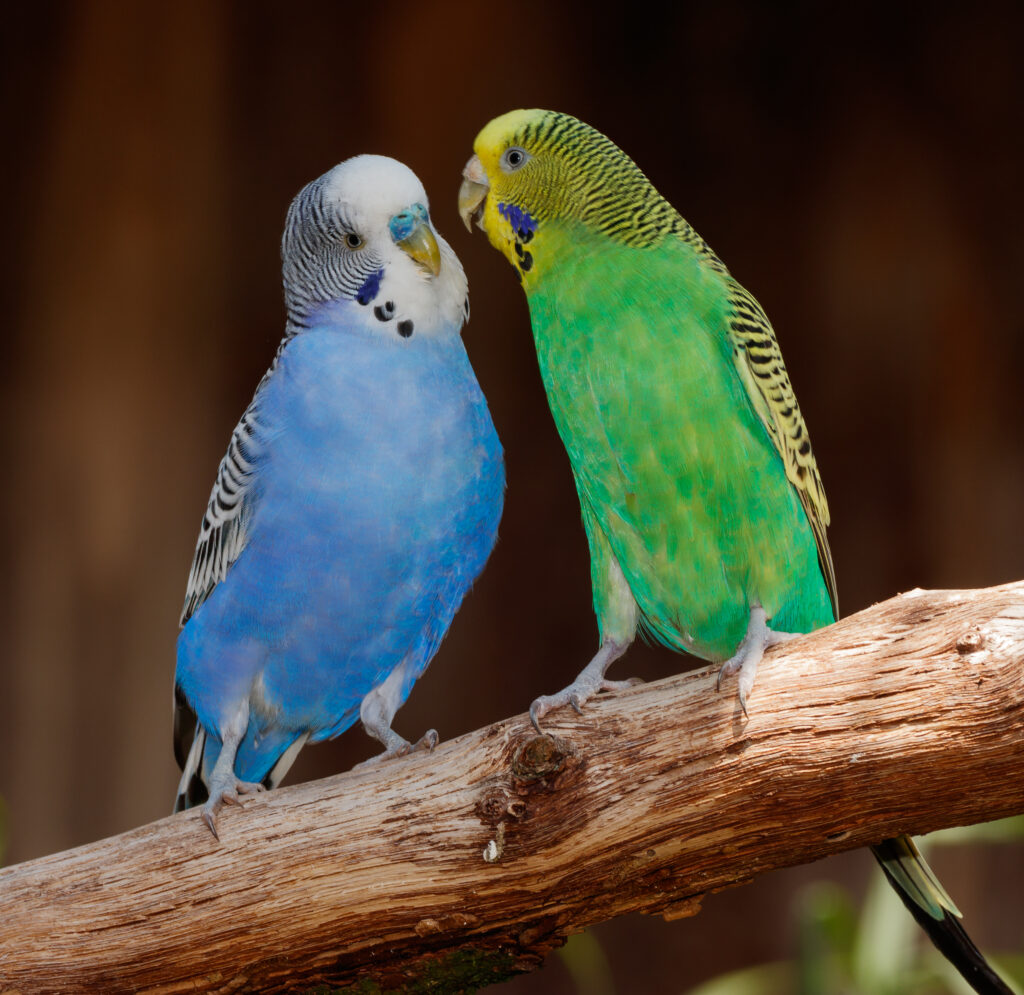
Budgerigars, commonly known as budgies or parakeets, are small, highly social parrots native to Australia. They are one of the most widely kept parrot species in captivity due to their friendly personalities, intelligence, and vibrant color mutations. Budgerigars are vocal, active, and display complex social behaviors, making them popular for both beginner and experienced bird keepers.
They typically measure around 18 cm in length and weigh 30–40 grams. Despite their small size, budgerigars are highly active and require stimulating environments to thrive in captivity. This article consolidates historical and modern knowledge about budgerigars, covering natural history, captive care, breeding, nutrition, and modern avicultural trends.
Historical Background
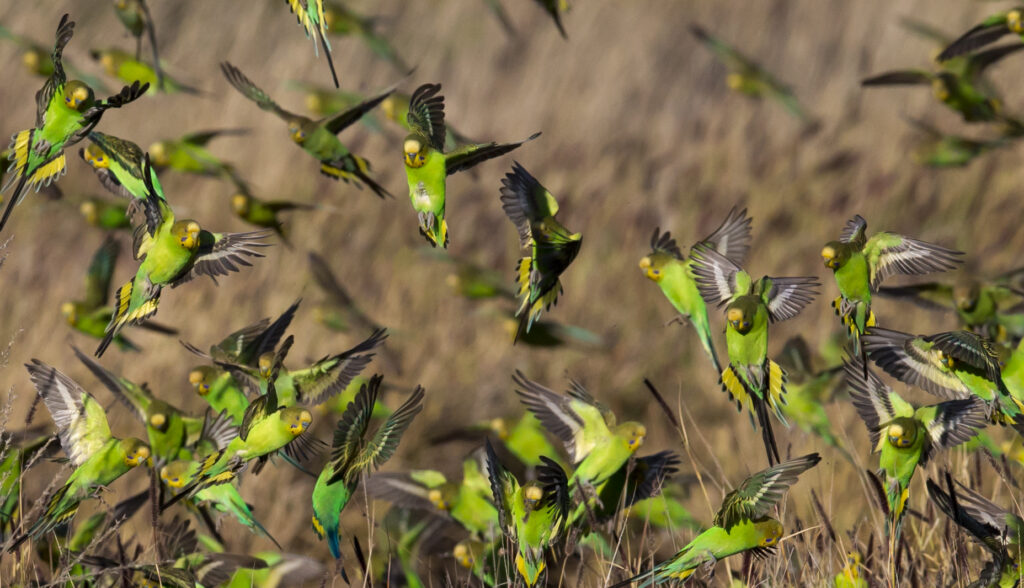
Budgerigars are native to the open woodlands, grasslands, and scrublands of Australia. Indigenous Australians have long observed their flocks, which travel in large groups and exhibit sophisticated social communication. European interest in budgerigars began in the 19th century, leading to their introduction into aviculture worldwide.
Captive breeding of budgerigars became widespread in the early 20th century, particularly in Europe and Japan. Selective breeding led to the diverse color mutations available today, from classic green and yellow to blue, white, and albino variations. Budgerigars remain a cornerstone species in avicultural research due to their adaptability, breeding success, and social behavior.
Breeding & Husbandry Insights
Budgerigars are relatively straightforward to care for but thrive best under proper environmental and social conditions:
- Housing: They need spacious cages or aviaries that allow for flight and play. Vertical perches, ladders, and swings help mimic natural climbing and flying behavior.
- Socialization: Budgerigars are extremely social and often do best in pairs or small flocks. Interaction with human caretakers, toys, and training sessions enhances mental stimulation.
- Breeding: Breeding budgerigars in captivity is well-documented. Nest boxes should simulate natural tree cavities, and breeding pairs require privacy and minimal disturbance. Clutch size typically ranges from 4–6 eggs, with an incubation period of approximately 18 days. Both parents feed the chicks until fledging, which occurs around 30 days.
Nutrition & Health Trends
A balanced diet is essential for budgerigar health, feather quality, and longevity:
- Diet Composition: Wild budgerigars primarily eat grass seeds, but captive care requires a varied diet. High-quality pellets, supplemented with fresh vegetables, leafy greens, and occasional fruits, provide essential vitamins and minerals.
- Calcium & Vitamins: Egg-laying females need additional calcium to support reproduction. Vitamin supplements may be used sparingly under avicultural guidance.
- Behavioral Effects: Proper nutrition contributes to cognitive ability, social behavior, and vibrant plumage. Nutritionally deficient birds are prone to feather plucking, lethargy, or reduced immunity.
Modern Challenges
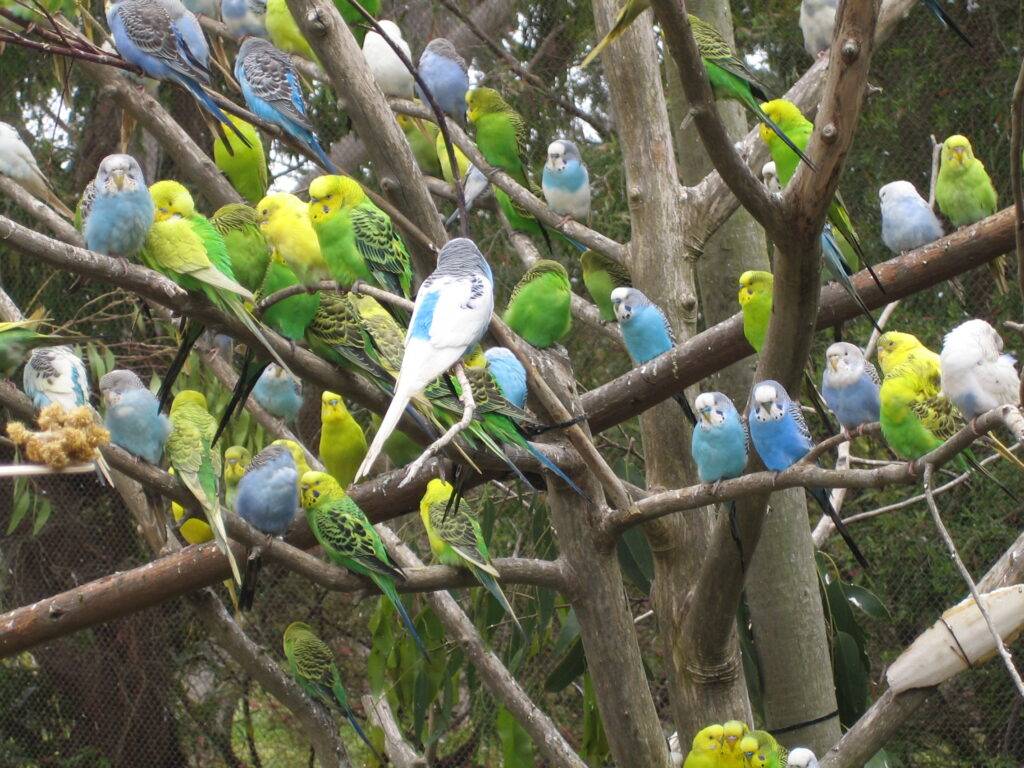
Budgerigars face few conservation issues in the wild, as they are abundant across Australia. However, modern avicultural challenges include:
- Housing Limitations: Overcrowding or undersized cages can lead to stress, aggression, or behavioral issues.
- Health Management: Viral, bacterial, and fungal infections can occur in captive flocks if hygiene is neglected. Regular health checks and quarantine for new birds are recommended.
- Selective Breeding Ethics: Maintaining genetic diversity while breeding for color mutations requires responsible planning to avoid hereditary health issues.
References & Covered Topics
This article is based on decades of avicultural practice, historical observations, and modern husbandry research. Covered topics include:
- Natural history and social behavior of wild budgerigars
- Breeding, housing, and husbandry insights for captivity
- Nutrition, health, and behavioral enrichment strategies
- Modern challenges and responsible breeding practices
Note: All information on this page is original synthesis — no copyrighted text from books or articles has been used.